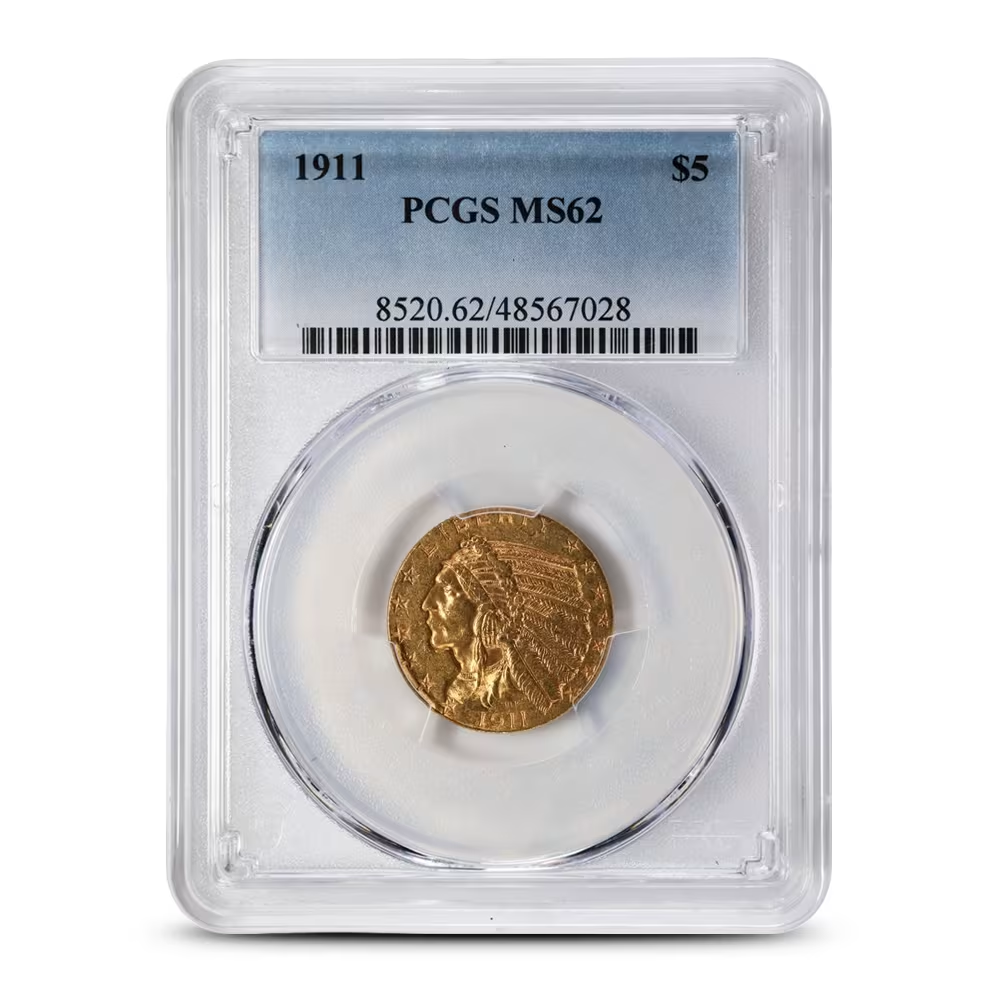
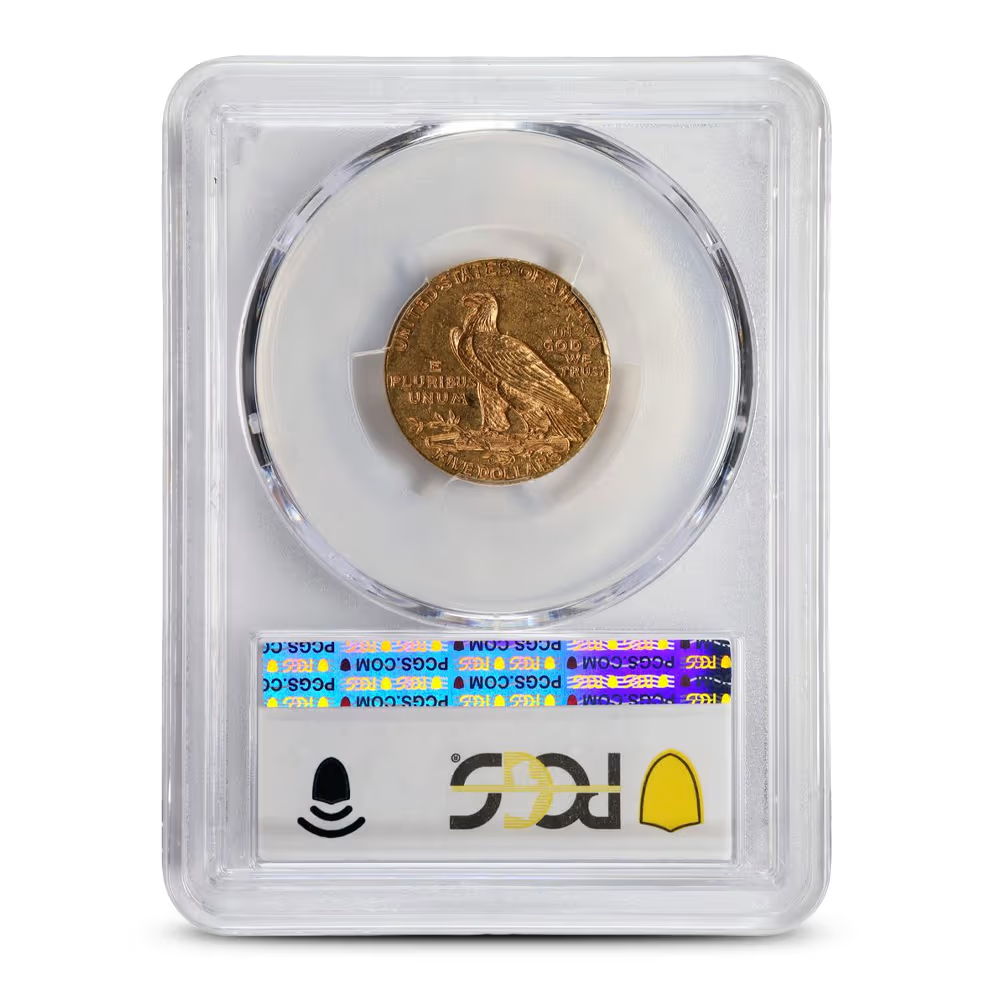
The $5 Indian Head Half Eagle stands among the most distinctive and historically important coin series in the history of American numismatics. Its innovative incuse design separates it from every other US gold coin produced before or after its release, contributing to a lasting collector appeal that has continued to grow since the series debuted in 1908. Minted in .900 fine gold from 1908 through 1929, these coins pair intrinsic gold value with Bela Lyon Pratt’s groundbreaking artistic vision.
The 1911 Half Eagle from Philadelphia was produced with a mintage of 915,000 coins, one of the more generous production figures of the series’ middle years and a reflection of the healthy gold coinage demand of the early Progressive Era economy under President Taft. Additional 1911 issues were struck by the Denver and San Francisco Mints, with Denver striking just 72,500 coins and San Francisco leading the way with 1.416 million coins.
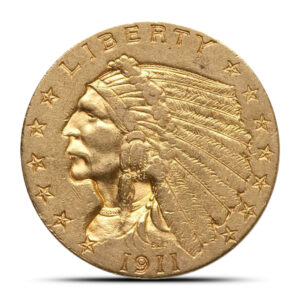
All 1911 Pre-33 $5 Indian Gold Half Eagle Coins available here are certified MS62. Coins at this grade display subdued mint luster along with noticeable contact marks in both the primary and secondary focal areas, accompanied by several scattered hairlines. Despite these characteristics, the coin retains an overall pleasing appearance that is appropriate for the assigned grade.
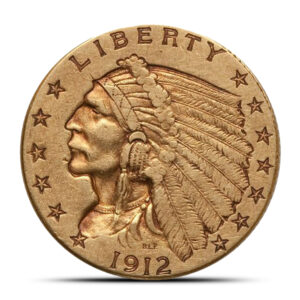
The obverse of the 1911 Pre-33 Indian Gold Half Eagle features the portrait of an indigenous figure. Bela Lyon Pratt created a detailed image of a Native American chief wearing a full war bonnet, executed using the series’ signature incuse style, in which the design is recessed below the surface of the coin instead of raised above it. This uncommon approach, unlike any previously used on American coinage, gives the portrait a sculpted appearance with a distinctive visual character all its own.
On the reverse of the 1911 $5 Indian Half Eagle Coin, Pratt depicts a standing bald eagle using the same incuse design technique found on the obverse. Shown with a calm, natural stance that conveys quiet strength, the eagle marked a departure from the traditional heraldic motifs seen on earlier US gold coins, introducing a more lifelike and distinctly American interpretation of the nation’s enduring symbol.